
Two gas grills come with stainless steel grates.
So why the price is different?
One uses standard round rods. Another uses 10 mm solid hexagonal bars. Some grill grates even use hollow bars that look solid from the outside.
And premium models may use a single 10 mm stainless steel plate, cut into a cooking grate with a laser.
Here’s the thing:
The best grill grate isn’t always the heaviest or most expensive one.
As a grill manufacturer, I look at three things when helping customers choose grill grates:
- Material: How well does it resist rust and handle heat?
- Manufacturing technique: Is it welded, laser-cut, or cast?
- Shape: How does the cooking surface touch the food?
In this guide, I’ll break down the different types of grill grates, their pros and cons, and how to choose the right option for your grills.
Let’s get started.
Table of Contents
1. What Are the Different Types of Grill Grates?
There are four main grill grate material options: stainless steel, porcelain-enameled metal, cast iron, and titanium.
Stainless Steel Grill Grates
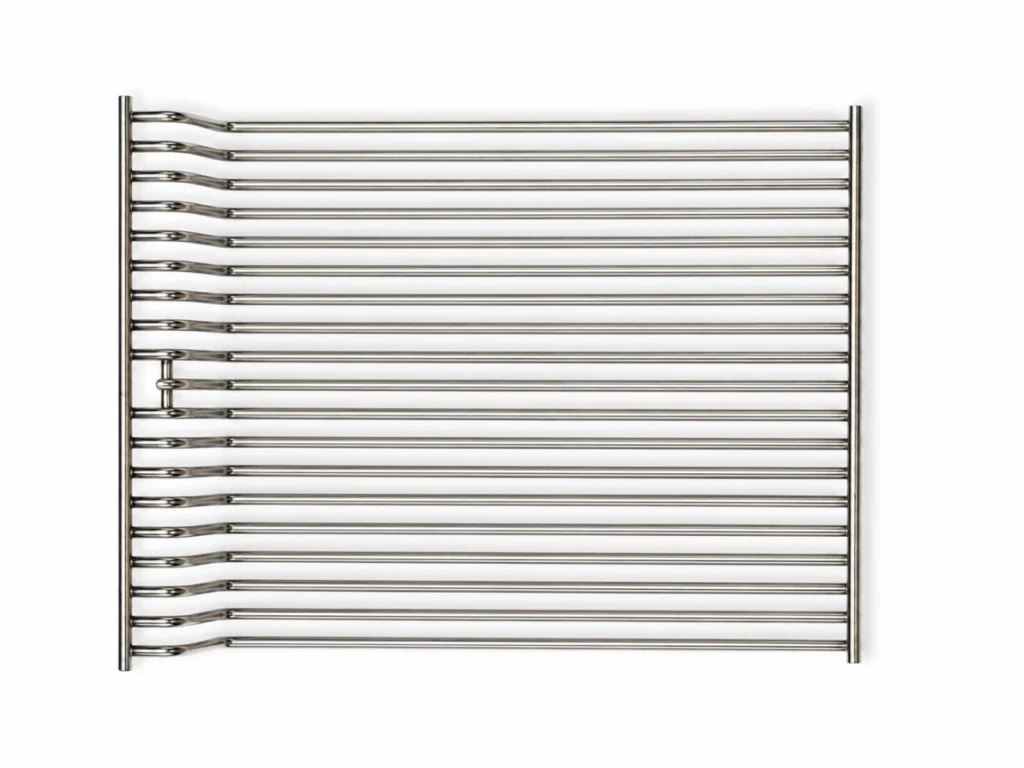
304 stainless steel is my first choice for many mid-range and premium gas grills.
Why?
It offers good corrosion resistance, lasts a long time, and doesn’t need much maintenance.
For coastal areas, such as parts of Florida, I may recommend 316 stainless steel. It offers better resistance to chloride-related corrosion.
Stainless steel grill grates also come in different forms, including welded rods, hexagonal bars, laser-cut plates, and precision castings.
Pros: Corrosion-resistant, durable, and easy to maintain.
Cons: Lower thermal conductivity than cast iron. Food can stick to the surface, especially when the grate is not properly heated or cleaned.
Porcelain-Enameled Grill Grates
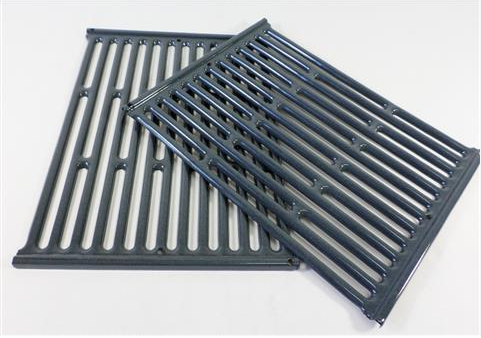
Porcelain coated grill grates have a glass-like coating over steel or cast iron.
The coating suface is a hard, smooth with stable chemical properties, that helps protect the coated metal.
So, you can make cleaning easier.
Porcelain enamel is brittle. If the coating chips, moisture can reach the steel or cast iron and cause rust.
Pros: Easy to clean, good corrosion protection while the coating is intact, and often affordable.
Cons: The coating can chip or crack. Damaged areas may rust.
Cast Iron Grill Grates
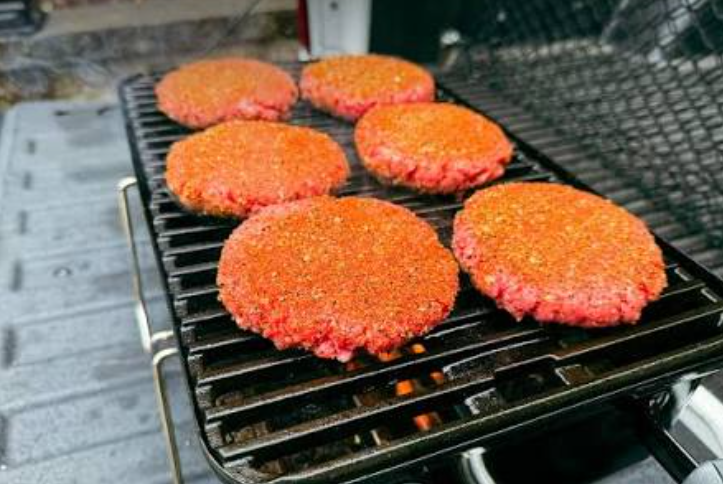
Cast iron grill grates are popular for one reason:
They can hold a lot of heat.
A thick cast iron grate stores heat and transfers it to food through direct contact. This helps create dark grill marks and a well-browned surface. Many traditional families love cast iron grill grates.
However, cast iron isn’t automatically the fastest-heating material. Grate thickness, mass, and burner output also matter.
When heat is transferred to the cast iron cooking grate, it quickly triggers the Maillard reaction on the meat’s surface, helping retain moisture and create a beautifully seared exterior with a tender, juicy center.
However, the uncoated cast iron grates are prone to rust and requires prompt cleaning, thorough drying, and regular seasoning with oil.
Pros: Good heat storage, strong grill marks, and reasonable material cost.
Cons: Heavy, prone to rust, and requires regular maintenance.
Titanium Grill Grates
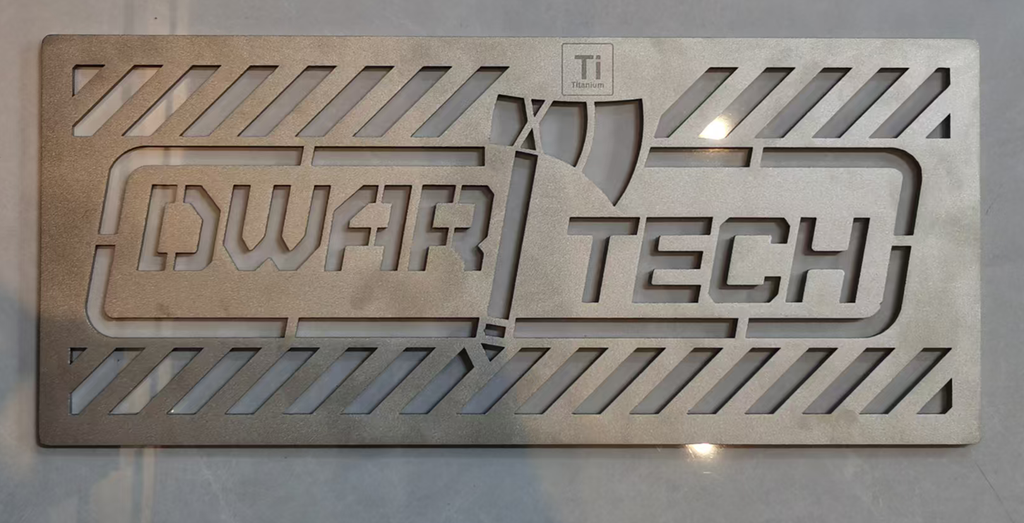
Titanium is another option we offer for custom grill grate projects.
Compared with stainless steel, pure titanium has a lower density and excellent corrosion resistance.
For small orders, we can produce titanium grates using laser-cut plates.
For larger OEM projects, we can also explore custom titanium rods or titanium-based composite structures(Titanium-aluminum, titanium-steel composite material grilling mesh), subject to engineering review.
Pure titanium cooking grates provide excellent corrosion resistance without relying on a surface coating. Titanium is non-toxic, odorless, highly biocompatible, and widely used in medical implants and premium tableware. It is ideal for high-end grills requiring lightweight construction and distinctive product design, although its material and processing costs are relatively high.
Pros: Lightweight for the same volume, corrosion-resistant, durable, and suitable for premium customization.
Cons: High material and processing costs.
For more background, see Industrial Metal Supply’s guide to choosing grill grate metals.
2. How Are Grill Grates Made?
Here’s something many grill buyers overlook:
Two grates made from the same 304 stainless steel can have very different prices.
Different manufacturing processes can also affect the weight, appearance, cost and customization ability of the grill grates.
Solid Stainless Steel Rod Grates
Solid rod grates are made by cutting and welding stainless steel bars into a cooking grid.
At Dwarf Grills, our standard solid rods start at 8 mm. One of our common premium options is a 10 mm hexagonal stainless steel bar.
We can customize the rod shape, diameter, spacing, and overall size.
But I don’t judge a grate by rod thickness alone.
I also check weld strength, flatness, and how the structure responds to repeated heating.
And I always confirm whether a rod/bar is solid or hollow. Two bars with the same outside dimensions can have very different weights.
Laser-Cut Grill Grates
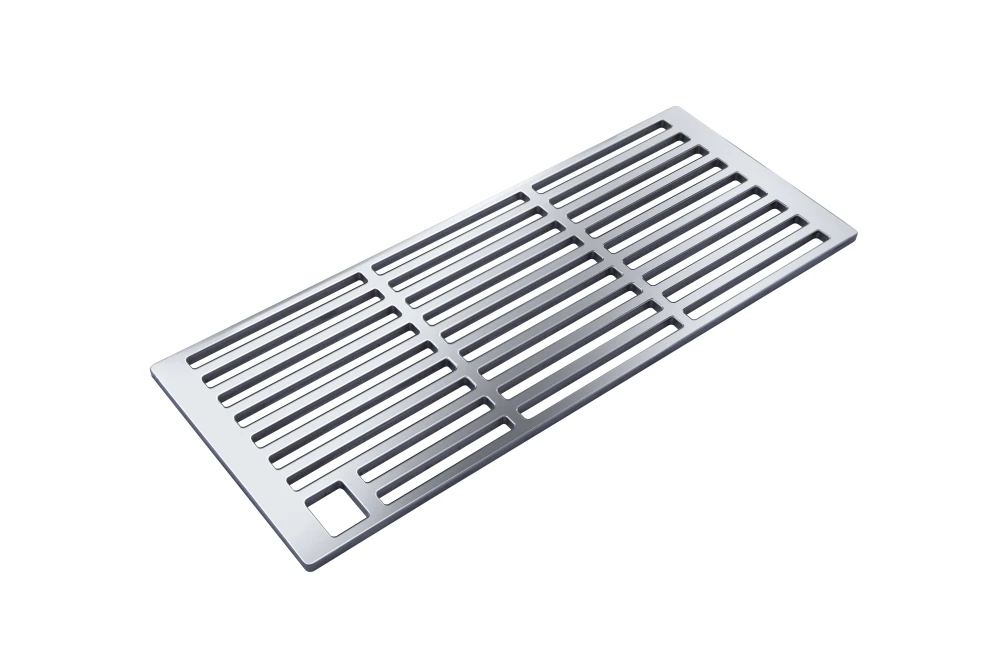
Laser-cut grates start with a single metal plate.
Our common premium option uses a 10 mm thick 304 stainless steel plate. We can also develop laser-cut titanium grill grates.
This process lets us create special slot holes, brand logos, and unique cooking patterns.
Sounds great, right?
It is. But thick plates use more material and can become heavy. It means higher material costs. I also need to consider weight, hole design, deburring and cleaning convenience
In addition, the grill grates after laser cutting usually needs to undergo leveling and surface treatment, and the cost of this part also needs to be think over.
Cast Grill Grates
Casting is widely used to make cast iron grates. Porcelain enamel can then be applied to suitable cast iron or steel bases.
Casting is the primary manufacturing method for cast iron cooking grates, and most porcelain-enameled grates also use cast iron as their base material. Casting can also be used to manufacture stainless steel grates. Investment casting allows us to create complex cross-sections and integrated one-piece structures.
With dedicated tooling, we can develop custom textures, profiles, and brand-specific design elements. The exact stainless steel grade will be confirmed according to the project requirements.
Grill Grate Manufacturing Comparison
| Parameter | Welded Solid Rod | Laser-Cut Solid Plate | Lost-Wax Investment Casting |
| Main Material | 304 or higher-grade stainless steel | Typically 304 stainless steel | Confirmed according to project requirements |
| Common Specification | ≥8 mm; typically 10 mm hexagonal rods | Typically 10 mm thick plate | Customized according to tooling |
| Key Features | High strength and durability | Rigid structure with flexible pattern design | Complex, integrated one-piece designs |
| Customization | Profile, rod diameter, spacing, material, and shape | Logo, slots, patterns, material, and thickness | Profile, tooling, and surface pattern |
| Suitable Products | Mid- to high-end gas and charcoal grills | Premium brand-exclusive product lines | High-end OEM projects |
| Main Cost Factors | Rod consumption and welding | Material weight and machining | Tooling investment |
3. Which Grill Grate Shape Is Best?
In addition to the materials, I will also check the cross-sectional shape of the grill rods.
Round Rod Grill Grates
Round rods are simple, common, easy to clean.
Their curved surface creates a narrow contact area with food.
They are also usually one of the more economical rod designs.
Hexagonal and Square Grates
Hexagonal and square bars can create a wider contact surface when installed with a flat face facing upward.
That can produce wider grill marks and increase direct contact between the hot metal and food.
Our 10 mm solid hexagonal stainless steel bars are a common choice for premium grill projects.
Hexagonal and Square Cooking Grates
Hexagonal and square solid-bar grates can be installed with a flat surface facing upward. This increases contact with the food, improves heat transfer, and produces wider, more defined sear marks.
Oval, diamond, and triangular bars reduce the contact area between the grate and food. This helps minimize sticking and improves grease drainage. Diamond bars use less material than triangular bars but may provide slightly lower welding strength.
One of our standard premium configurations uses 10 mm solid hexagonal stainless steel bars, measured across the corners.
We also support custom grate shapes based on samples, technical drawings, or your design requirements. Share your concept with us, and our engineering team can turn it into a production-ready solution.
4. What About Grate Spacing?
I pay close attention to the gaps between bars.
Narrower gaps support smaller foods and create more metal contact when the bar width stays the same. However, they may also get more grease and food residue.
Wider gaps allow more open space for heat and grease to pass through. They can work well for larger cuts of meat, but small foods may fall between the bars.
For OEM development, we can adjust rod spacing based on the grill’s cooking style and target customers.
5. Different Surface Finishing Methods
We can explore sandblasting, electropolishing, mirror polishing, and suitable coating processes (sunch as enamel, titanium plating, thermal spraying, PVD, etc) depending on the material and design.
Manufacturing engineers views, we checked how each finish affects cleaning, appearance, and food-contact safety.
I’ll cover these surface treatments in more detail in a separate guide.
6. What’s the Best Way to Clean Grill Grates?
The best way to clean grill grates depends on the material and surface finish.
Here’s how I approach each type.
How to Clean Stainless Steel Grill Grates
I remove food residue with a suitable grill-cleaning tool.
After the grill grate cools, I use warm water and mild cleaner according the manufacturer’s illustration.
Then I rinse and dry the grate.
How to Clean Cast Iron Grill Grates
You know the bare cast iron needs extra attention.
It can be cleaned with warm water and a hard brush. Do not use degreasing cleaners. I will dry it totally after cleaning. For bare cast iron, before storage after use, it is necessary to apply a thin layer of vegetable oil and dry it by baking to prevent rusting.
Then I apply a thin layer of cooking oil when needed to help protect it from rust.
I avoid leaving bare cast iron soaking in water.
How to Clean Porcelain-Enameled Grill Grates
For porcelain enamel, I use a non-abrasive brush and common cleaner for cleaning.
I avoid sharp tools. It is particularly necessary to avoid bumps and sudden temperature changes to prevent damage to the coating. If the coating peels off severely, I recommend checking whether the grate needs replacement.
How to Clean Titanium Grill Grates
I clean titanium grates with a mild cleaner and a non-abrasive tool.
Titanium resists corrosion well, but food residue and grease still need to be removed.
For laser-cut grates, I also inspect the slots and corners where grease can collect.
How to Choose the Right Grill Grates
When I help a brand develop outdoor grills, I start with the brand owner target market.
A premium built-in gas grill has different needs from a budget charcoal grills.
And a coastal outdoor kitchen may need different materials from a grill used in a dry climate.
In addition to the grill grates material, I will also check the bar diameter, plate thickness, welding quality, dimensional tolerance and future replacement requirements for accessories.
| Grill Application | My Recommended Starting Point |
| Premium Gas Grills | 304 stainless steel solid rods |
| Coastal Outdoor Kitchens | Consider 316 stainless steel |
| Budget-Friendly Grills | Cast iron or suitable porcelain-enameled grates |
| Premium Custom Grills | Hexagonal rods or laser-cut stainless steel |
| Flagship OEM Projects | Custom titanium or precision-cast designs |
Don’t Forget Replacement Grill Grates
Replacement parts are easy to overlook during product development.
But they matter.
When I develop replacement BBQ grates, I check the exact length, width, thickness, support points, and clearance inside the grill to ensure correct installation.
I also confirm that the new grate doesn’t interfere with other components.
For brand owners, I recommend keeping drawings and specifications for future spare-part orders.
7. Frequently Asked Questions
Do 304 and 316 Stainless Steel Automatically Meet Food Safety Requirements?
No.
As a part that comes into direct contact with food, the grill grates needs to be independently certified for food contact safety.
I check the intended market, material documents, surface treatments, and applicable testing requirements.
For example, the United States and European markets have different food-contact rules.
FDA-related requirements and Germany’s LFGB framework are not interchangeable certificates.
For special materials or coatings, I recommend confirming the required testing before mass production.If you choose special materials, we can also act as your agent for certification
Similarly, grill grates made of cast iron, enamel, titanium and other stainless steel materials should also be certified for food safety in the target region. This is not an investment that should be saved, and the certification fee for a single material is very low. You don’t need to worry about it.
Are Stainless Steel Grill Grates Better Than Cast Iron?
I prefer stainless steel when corrosion resistance and easy maintenance matter most.
I choose cast iron when a heavy cooking surface and heat storage are priorities, and regular maintenance is acceptable. If the price is sensitive, I would consider cast iron.
Are Titanium Grill Grates Better Than 304 Stainless Steel?
Not always.
Titanium offers lower density and excellent corrosion resistance, but it costs more.
I compare thickness, cooking performance, manufacturing cost, and food-contact requirements before choosing either material.
How Do I Choose Replacement BBQ Grates?
I start with the original grate’s dimensions, material, thickness, support points, and fit.
A replacement grate should match the grill’s structure, not just its advertised size.
Conclusion
A good grill grates cannot be judged merely by the names of the ingredients. Material, cross-sectional shape, manufacturing process and later maintenance all need to be considered together. Recently, the Trinity Paradox has been discussed online, and it is also applicable to the selection of models on grill grates.
There is no grill grate that offers the lowest price, highest durability, easiest cleaning, lightest weight, and best heat storage at the same time.
Every material and construction method need to be trade-offs.
For grill brands, the right grate should balance cooking performance, durability, manufacturing cost, and long-term replacement needs.
I’m from Dwarf Grills, an OEM/ODM grill manufacturer. I hope this guide helps you make a better choice for your next grill project.
If you need custom grill grates, you can contact us at hayley@dwarf-tech.com.
