
Fall is one of the best seasons to enjoy fresh seafood.
Fish is rich in natural oils. When the host of a party lifts the gas grill lid, the rich aroma of grilled fish fills the air. It blends with the fresh scent of olives and lemons.
A few close friends gather around, enjoy their drinks, share a good meal, and soak it all in
But while the gas grill is cooking, one gas accessory is doing an important job.
That part is the flame tamer. It’s a grill component that many BBQ lovers overlook.
And that’s exactly what I’m going to talk about in this guide.
The name “flame tamer” tells you what it does: it controls or tames the flames. I will explain this on the following.
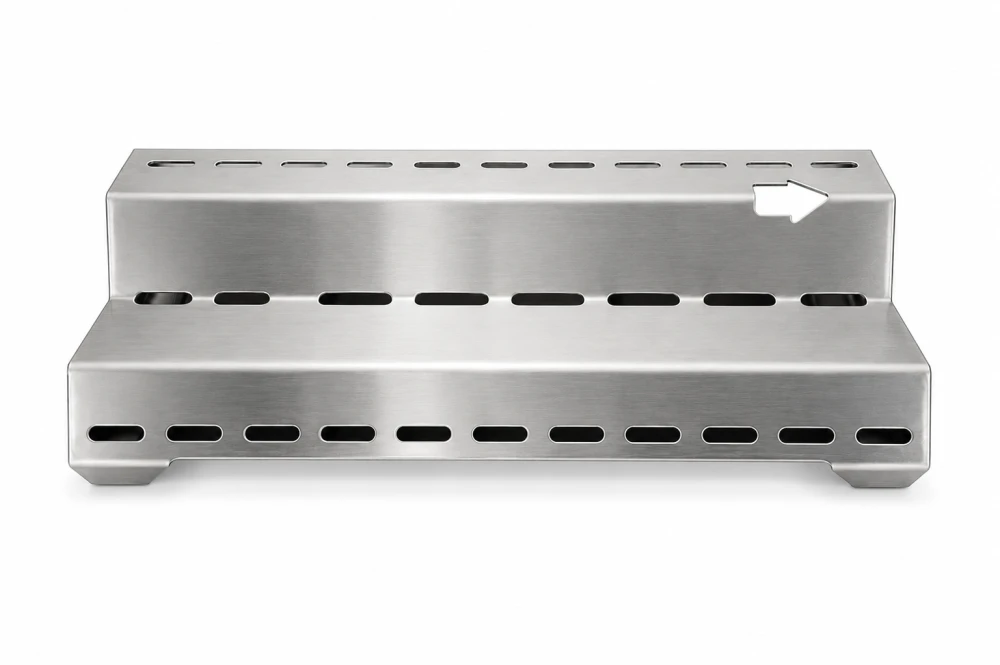
Today, there are four common types of flame tamers used in gas grills:
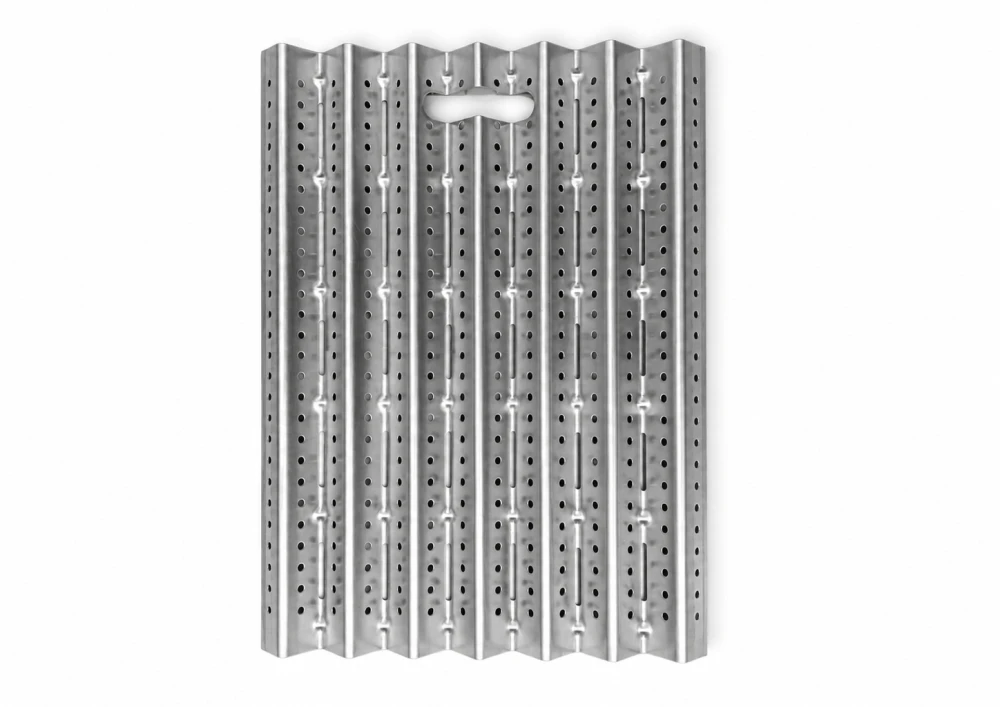
- Perforated Stainless Steel Flame Tamers
- Sheet-Cut and Bent Stainless Steel Flame Tamers
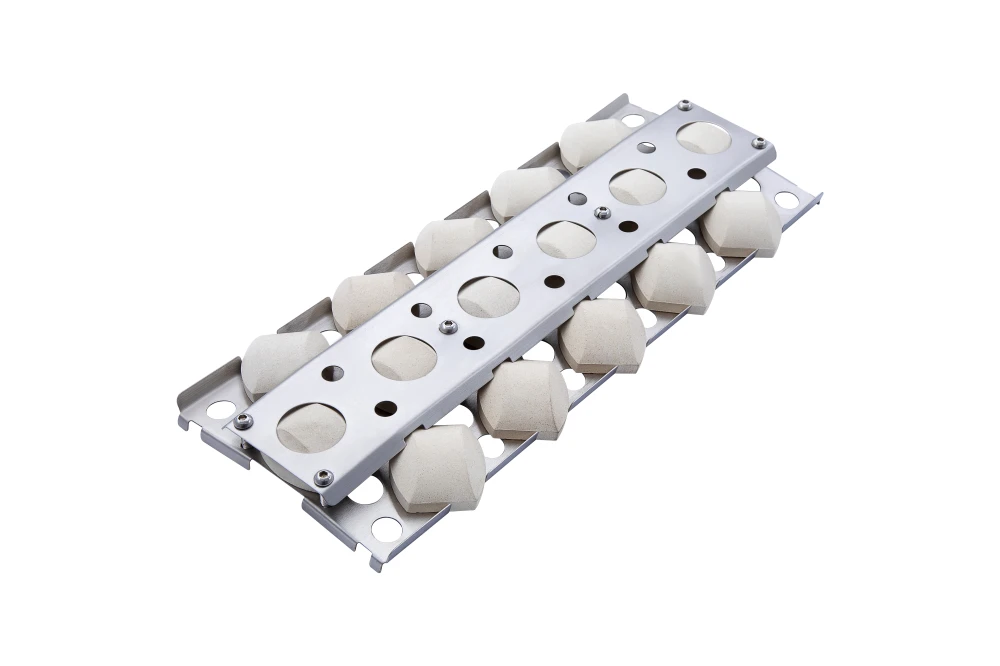
- Ceramic Flame Tamers
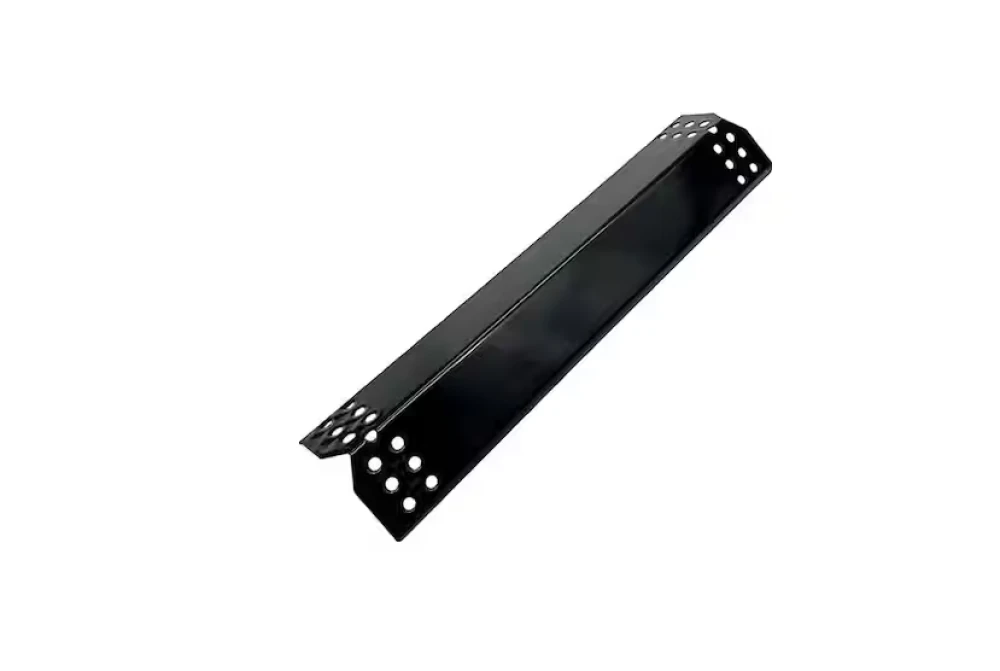
- Porcelain-Enameled Flame Tamers
If you are interested in different materials of gas grill, you can check our blog: https://dwarfgrills.com/outdoor-grill-materials-guide/
As a gas grill manufacturer, I’ll compare these flame tamers based on materials, manufacturing processes, heat distribution, ease of cleaning, and cost to you.
This guide will help grill brand owners, purchasing managers, and OEM product development teams understand the differences and choose the right design for their next gas grill project.
Table of Contents
1. What Is a Flame Tamer and How Does It Work?
A flame tamer is a heat-control and heat-transfer component installed above the burners and below the cooking grates of a gas grill.
Its main job is to protect the burners, change how heat spreads, and block grease drippings from falling directly onto the flames.
It also reduces direct flame touching food.
This is especially helpful for beginners who don’t want to burn their food and waste a good piece of meat.
Depending on the grill brand, you may see flame tamers called:
- Heat Plates
- Heat Tents
- Burner Covers
- Heat Shields
- Flavorizer Bars
These are all names used for flame tamers or similar basic principle.
The main differences are the materials and shapes you see.
And when you hold them in your hands, you’ll notice another difference: their weight and appearance.
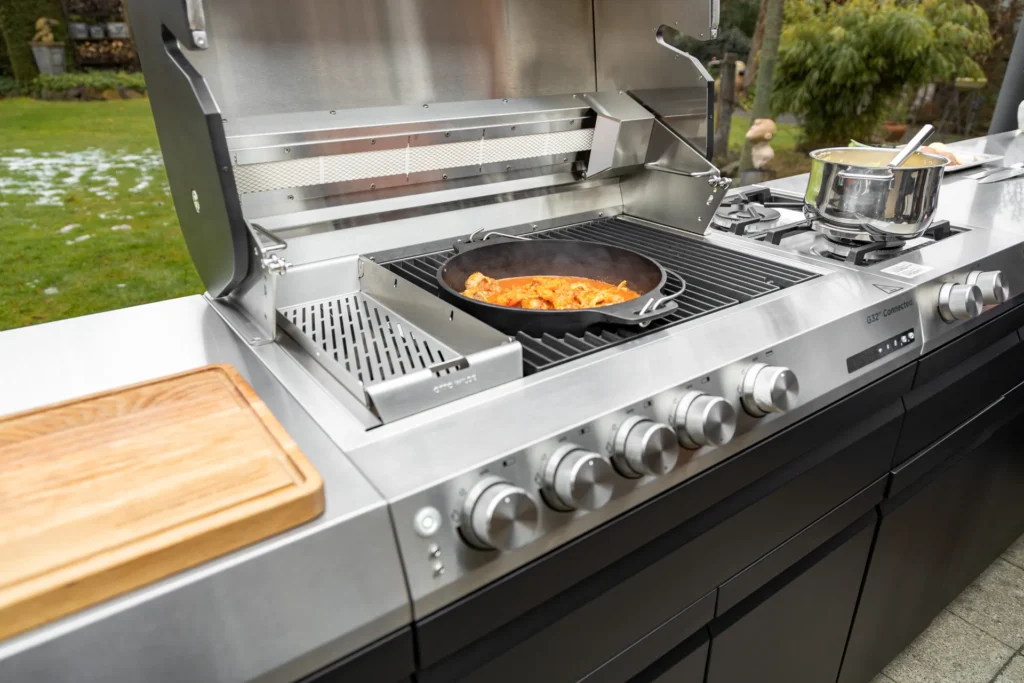
How Do Flame Tamers Affect Heat Distribution?
When we turn on the gas grill knob, the burner starts working.
The flames and hot combustion gases rise toward the grill grates.
Without a suitable flame tamer, the area directly above the burner may become much hotter than the areas beside it. Of course, this also depends on the shape of the burners in your gas grill.
If you’re interested in learning more about burner shape and types, you can check out my previous blog:
Types of Grill Grates: The Complete Buying Guide
Now, back to flame tamers.
A flame tamer changes how heat moves inside the grill.
For example, a V-shaped stainless steel flame tamer blocks some of the heat rising directly from the burner.
This allows hot gases to move along both sides of the metal plate.
Perforated flame tamer allows some hot gases to pass through its holes, while the remaining heat moves around the plate.
A ceramic flame tamer works differently.
It absorbs heat, stores it, and then releases that heat into the surrounding cooking area.
If you enjoy grilling in winter, I recommend trying a ceramic flame tamer.
Why?
Because ceramics flame tamer can store heat well.
Even after you turn off the burners, the ceramic can continue releasing stored heat for a while.
This means food left on the cooking grates may stay warm for some time after the flames are turned off.
But there’s one thing I want to make clear:
A flame tamer does not automatically make a gas grill heat more evenly. Only a well-designed structure can improve heat distribution.
The material, sheet thickness, hole diameter, burner position, and airflow all affect the final result.
2. Four Main Types of Flame Tamers
2.1 Perforated Stainless Steel Flame Tamers
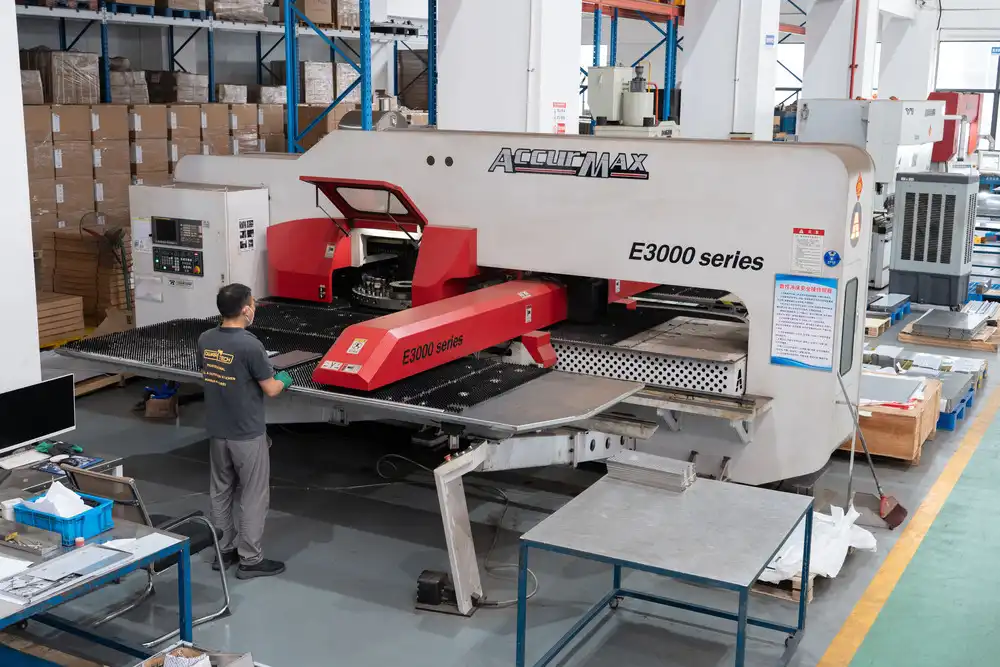
Punching Machine
Perforated stainless steel flame tamers are usually made from stainless steel sheets.
Our Dwarf Grills first creates holes in the metal using a punching machine.
The sheet is then bent into the required shape.
The holes can be round or long and narrow.
We can custom hole patterns based on drawings provided by the grill brand owner.
Pros and Cons of Perforated Flame Tamers
Advantages:
- The hole pattern and open-area ratio can be used to adjust how heat flows through the plate.
- The design is suitable for OEM product development and custom grill designs.
Disadvantages:
- Grease and carbon deposits can build up inside the holes.
- Some grease may pass through the holes.
2.2 Sheet-Cut and Bent Stainless Steel Flame Tamers
Sheet-cut and bent stainless steel flame tamers are common designs used in gas grills.
They are usually made by cutting stainless steel sheets and bending into design shape.
The most common design is an inverted V shape.
It’s also called a tent-style heat plate.
The raised center of the flame tamer sits directly above the burner.
Both sides slope downward.
This design blocks some of the heat rising directly from the burner.
It also helps guide grease along the surface of the metal plate.
Is a Thicker Stainless Steel Plate Always Better?
Not necessarily.
A thicker metal plate usually has more mass and greater structural stiffness.
But it also requires more material.
That means more weight and a higher manufacturing cost.
The thickness of the plate also affects how quickly it heats up and how it responds to temperature changes.
If the plate is too thin, it may develop noticeable deformation after long periods of exposure to high heat.
Why Are Sheet-Cut Flame Tamers Usually Easier to Clean?
The answer is simple.
They don’t have rows of small holes.
For a basic V-shaped flame tamer, users can usually remove grease and carbon buildup directly from the metal surface.
However, I also check the bent edges, mounting points, and underside of the plate.
These areas may still collect grease.
2.3 Ceramic Flame Tamers
Ceramic flame tamers are usually made from ceramic blocks, ceramic briquettes, or ceramic tiles.
They are installed above the burners using a metal tray or support frame.
Compared with metal flame tamers, ceramic systems can store more heat because of their greater thermal mass.
Different ceramic densities, porosity levels, and dimensions can all affect how they perform.
Why Do Ceramic Flame Tamers Retain Heat?
When the burner heats the ceramic flame tamers, the ceramic absorbs heat.
As the temperature rises, it also transfers heat to the surrounding area through radiation.
When you turn off the gas grill, the heat stored inside the ceramic does not disappear immediately.
Why Do Ceramic Flame Tamers Need Metal Trays?
Ceramic briquettes and blocks usually need a stable support structure.
The metal tray holds the ceramic pieces in place.
It also affects airflow, the spacing between ceramic pieces, and grease drainage.
For example, if the tray has too few openings, it may restrict airflow.
If the ceramic pieces are packed too closely together, they may also change how hot gases move through the grill.
What Maintenance Problems Can Ceramic Flame Tamers Have?
Grease and carbon deposits can build up on ceramic surfaces.
Ceramic is easy brittle.
Impacts during shipping, knocks during installation, and unsuitable thermal shock conditions can cause ceramic flame tamers cracks or breakage.
For grill brands, I recommend checking whether individual ceramic briquettes can be replaced during the product development stage.
2.4 Porcelain-Enameled Flame Tamers
Porcelain-enameled flame tamers are usually made from carbon steel sheets,through cut and bent into shape.
A porcelain enamel coating is then applied to the surface and fired at a high temperature.
Compared with 304 stainless steel flame tamers, porcelain-enameled steel flame tamers cost is lower.
Good thing: enamel coating also helps keep moisture and grease away from the steel underneath.
This protects the inner metal.
But there’s one detail that many purchasing managers overlook.
The areas most likely to develop problems are often not the large, flat surfaces. They’re the edges, bends, and mounting holes.
These areas are more likely to be affected by manufacturing defects, impacts, and installation stress.
If the enamel develops pinholes, cracks, or chips, the carbon steel underneath may become exposed to moisture, salt, and hot grease.
Over time, the exposed steel may begin to corrode.
There’s another issue to consider.
Flame tamers go through repeated heating and cooling during normal use.
Steel and porcelain enamel have different thermal expansion properties.
If the materials are not properly matched, or the firing process is not well controlled, the coating may develop tiny cracks.
In some cases, parts of the enamel coating may even peel away.
3. Perforated Stainless Steel VS Sheet-Cut Stainless Steel VS Ceramic VS Porcelain-Enameled
If you’re choosing a flame tamer for a new gas grill, I recommend not starting with the price.
Why?
Because the cheapest flame tamer doesn’t always have the lowest long-term cost.
Here’s how the three flame tamer designs compare.
| Feature | Perforated Stainless Steel Flame Tamer | Sheet-Cut Stainless Steel Flame Tamer | Ceramic Flame Tamer | Porcelain-Enameled Flame Tamer |
| Heat Distribution | Hole patterns can be used to adjust heat flow | Bent shapes guide hot gases | Depends on ceramic arrangement and thermal mass | Depends on the shape and design of the steel plate |
| Heat Retention | Depends on the sheet’s mass and structure | Depends on sheet thickness and mass | Systems with greater thermal mass can store more heat | Depends mainly on the steel’s thickness and mass |
| Cleaning | Holes take more time to clean | Usually easier to clean | Ceramic pieces and trays need cleaning | Smooth enamel coating is easy to clean when intact |
| Durability | Depends on thickness, hole pattern, and material | Depends on thickness, material, and support structure | Ceramic may break, and metal trays need corrosion protection | Enamel may chip or crack, exposing the steel to corrosion |
| Cost | Requires extra hole-making operations | Usually involves a simpler manufacturing process | Includes ceramic parts, metal trays, and assembly costs | Lower base material cost, but requires enamel coating and firing |
4. How to Choose Flame Tamers for OEM Gas Grills
For grill brand owners and purchasing managers, flame tamers affect the experience your customers have when using your products.
4.1 Stainless Steel Grade and Sheet Thickness
304 stainless steel is suitable for many mid-range and premium outdoor gas grills.
For coastal areas or environments with high salt exposure, I may consider 316 stainless steel, consider the cost and the actual risk of corrosion.
After choosing the material, I check the sheet thickness.
The thickness must meet the requirements for structural strength, heat deformation, and service life.
4.2 Perforation Pattern and Open-Area Ratio
For perforated flame tamers, I ask our engineers to confirm the hole diameter, hole spacing, open-area ratio, and hole positions.
At Dwarf Grills, we deburr all flame tamers to remove sharp edges and burrs left by the manufacturing process.
4.3 Bending Angle and Burner Clearance
The bending angle determines part of the flame tamer’s shape.
I also check whether the design interferes with normal combustion, allows grease to build up, or maintains a safe distance from the burner after heat deformation.
These problems need to be addressed during structural design and sample testing.
4.4 Ceramic Specifications and Support Trays
For ceramic flame tamers, we check the ceramic dimensions and density.
We also inspect the surface for cracks, chipped corners, and other visible defects.
But a ceramic piece that passes inspection does not mean the complete system is ready for use.
The metal tray’s material, thickness, openings, and support structure also need to be checked.
I also consider how the ceramic briquettes are secured during transportation.
For export orders, shipping damage is another part of the purchasing cost.
4.5 Replacement Parts and OEM Customization
Here’s a question I recommend every grill brand ask:
Will your customers still be able to buy the correct replacement flame tamer several years from now?
If your products are already sold in Europe or the United States, spare-parts availability will affect the after-sales service your distributors can provide.
That’s why I recommend keeping complete part drawings, material specifications, revision numbers, and installation dimensions during product development.
For OEM projects, Dwarf Grills can evaluate custom stainless steel flame tamers based on customer drawings or samples.
Our manufacturing options include sheet cutting, perforating, bending, and other custom fabrication processes.
For ceramic flame tamers, we can also evaluate ceramic specifications, support trays, and the required structure based on each project.
Both stainless steel and ceramic flame tamers require tooling for the proposed custom manufacturing process, so customers need to allow for tooling fees.
The final design depends on the burner layout, order quantity, and performance requirements.
Frequently Asked Questions (FAQ)
Are Flame Tamers and Heat Plates the Same Thing?
Yes. In many gas grills, these two names refer to the same or similar components.
However, different grill brands may use different structures and names.
When purchasing replacement parts, I recommend checking the original product drawings, dimensions, and part numbers.
Are Ceramic Flame Tamers More Even Than Stainless Steel Flame Tamers?
Not necessarily.
Ceramic systems can have greater thermal mass.
But greater heat storage does not automatically mean more even heat distribution.
The ceramic arrangement, burner position, airflow, and overall grill design all affect the result.
How Often Should Flame Tamers Be Replaced?
For metal flame tamers, I recommend replacement when heavy exposure to sauces and seasonings has contributed to serious corrosion.
For ceramic flame tamers, I recommend replacement when there are cracks, broken pieces, or damaged support trays.
If a flame tamer can no longer protect the burner properly or clearly affects grill performance, it’s time to consider replacing it.
Can OEM Grill Brands Customize Flame Tamers?
Yes.
Stainless steel flame tamers can usually be customized in terms of material, sheet thickness, dimensions, hole patterns, bending angles, and mounting structures.
For ceramic flame tamers, we can evaluate custom ceramic sizes, shapes, arrangements, and metal trays based on the project requirements.
Both types of flame tamers require tooling for custom production, and customers need to pay the related tooling fees.
The final solution depends on the burner layout, order quantity, and performance requirements.
Conclusion
Perforated stainless steel flame tamers give engineers more options for controlling heat flow.
But grease passing through the holes and cleaning difficulties are two things I need to consider.
Sheet-cut stainless steel flame tamers have a simple structure.
They are usually easier to manufacture and maintain.
However, their heat distribution still depends on a well-designed structure.
Ceramic flame tamers can store heat effectively and produce a stronger smoky flavor.
But they also bring challenges, including ceramic breakage, tray design, and maintenance costs.
When choosing between these options, I recommend looking at your budget and what your customers prefer.
I’m Hayley from Dwarf Grills.
We provide OEM/ODM gas grills and custom grill components for grill brands, importers, and wholesalers.
I hope this guide gives you some useful ideas for your next gas grill project.
If you’re developing a new flame tamer or looking for a custom stainless steel flame tamer supplier, feel free to contact us:hayley@dwarf-tech.com
